Leading at the Lister Hospital
According to the Chartered Institute of Building, women make up only 15 per cent of the UK construction industry, with approximately 2 percent working on-site. As for the electrotechnical sector, the figures are similarly low.
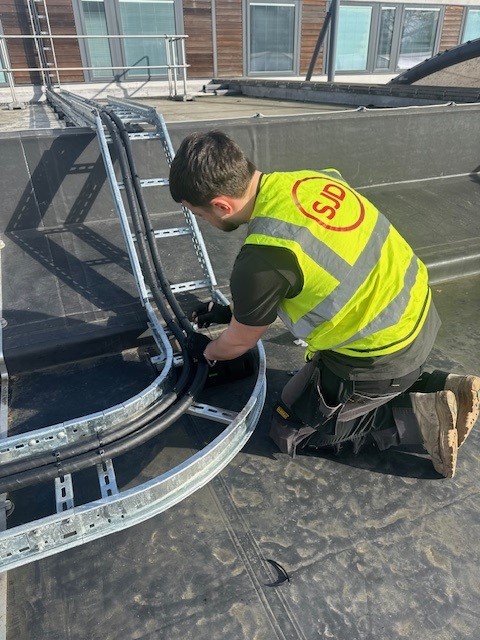
Bucking the trend is SJD site supervisor, Tara Warner who is currently managing a project at the Lister Hospital in Hertfordshire where SJD is upgrading the ambulance bays and providing the electrical infrastructure for a new contamination unit and offices. The project is demanding with much of the work taking place at height and with long cable runs. It’s also a live hospital where it’s essential that the work doesn’t get in the way of the day-to-day activities there.
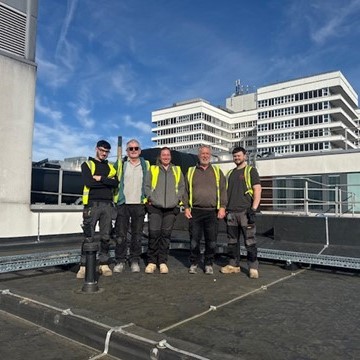
Tara’s team includes two apprentices and two of SJD’s most experienced engineers. She tells us about about the challenges on the project and how she manages a team with such differing competencies and levels of knowledge.
Tell us about the challenges of working at height.
For working at height, it is necessary to complete an online training course which will teach the essential dos and don’ts. The biggest challenge of working at height is remembering what equipment you need to accomplish the task, so you do not have to keep making trips up and down all the time.
What are the difficulties in installing the ladder rack across multiple levels and installing long runs of cable?
One of the initial challenges with a long cable pull is figuring out the best spot to start the pull, usually you would start where you plan to terminate one of the ends. Unfortunately, for the job at this hospital, that was not an option. We found a location where we could get most of the cable into position. Then we had to pull the rest of the cable off the drum and on to one of the roofs, which allowed me to reposition the guys to finish the rest of the cable pull.
The most important thing when carrying out cable pulls is making sure everyone understands the plan and to work as a team.
What are the challenges of working in a live hospital setting?
You must understand that the patients are the priority. It’s important you try to keep noise levels and any disruptions to a bare minimum. One of the ways that can help with this is by talking to the nurses and doctors. You need to ensure that you have a clear communication with them so they feel comfortable with you, and that way you can work well together.
What’s it like managing two apprentices, the youngest members of the team?
Managing apprentices can be difficult but luckily the two on this job are knowledgeable about the tasks they have been set, so require minimal guidance. Even though they are the youngest members of the team, their experience and current stage in their apprenticeship make them key members of the team. They add a fresh, energetic vibe to the site.
What’s it like managing the two eldest engineers too?
Managing the older guys is always fun; their wealth of experience is a huge asset to any job they are on. They’ve tackled just about every type of job at one time or another, usually have great ideas for alternative methods to complete the work, they are a great sounding board for advice. You just need to remember they need a break every now and then, as long as they can have a cup of tea, they’ll be happy!
Is it difficult being a leader the construction environment?
Being a leader in general can be tricky, and yes you can feel like a mother hen when trying to get everyone settled. You have to manage the pressure of completing the job on time, in good condition and tackling the daily issues. Working in a hospital adds to the pressure since you have to be aware of the public around the site.
I’ve found the best way to be a leader is working out people’s strengths and weaknesses. Once you understand that, you can assign tasks accordingly. When your team is happy, everything runs a lot more smoothly.